In the last Loyalty Letter we talked about the massive, untapped power of in-memory giving. It
struck such a chord that I thought we could explore another overlooked opportunity: donor newsletters – and the surprisingly effective stories many organizations miss.
Before we dig in, a million thank-yous to everyone who sent well wishes for my post-fusion rehab journey. “Big” triumphs this week included an almost-unassisted single leg step up, and relearning proprioception atop balance discs.
Little things, it seems, really can become big things...
5 Newsletter Stories That Help You Grow Generosity and Trust (Ideas for you to steal)
✍️ By Lisa Sargent June 2026
Over the years I’ve helped some truly fabulous nonprofits up their newsletter game. And one of the most common frustrations I hear
is:
“We don’t have any stories for our newsletter!”
But want to know the biggest irony?
Some of the most effective newsletter stories don’t come from glossy campaigns, dramatic breakthroughs, or headline-making achievements. They come from noticing everyday moments, overlooked conversations, and small details that help donors feel glad
they gave, connected, and appreciated.
That matters – a lot – because newsletters are about far more than reporting back.
Done well, newsletters help you strengthen the three key drivers of donor loyalty:
Trust Satisfaction Commitment
And the stronger those become, the more likely
donors are to stay involved, give again, and deepen their support over time. (More on strategy and frequency here.)
I’m not just guessing, either.
Research by UK consultancy About Loyalty found that even a one-point increase in a donor’s loyalty score
led to 5% more supporters giving again the following year and drove income growth of up to 20% over three years.
With that in mind, here are five newsletter story ideas to help you overcome “story scarcity,” grow generosity, and deepen loyalty among all your supporters:
(1.) The Wish
List
What it is: A list of specific, tangible items or resources that would make life better for those you serve (or for staff working to help).
Why Wish Lists work: They spark generosity outside of appeals and connect supporters to your work in tangible, behind-the-scenes ways. Wish Lists also create a deeper sense of trust and community, because you can report back and thank on items that have been
funded.
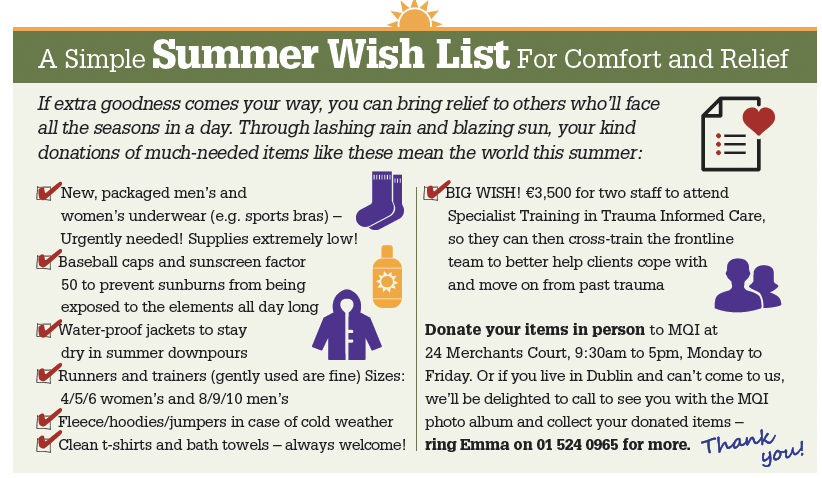
Wish List craft tip: The more specific, the better. A request for “supplies” is easy to forget. A request for sneakers in men’s sizes 8/9/10 for your shelter, or a specific type of lifesaving cardiac imaging technology (cost: $200,668) to help treat Coronary Artery Disease is far easier to picture, help fund, and remember.
The wish list below is just one example we’ve seen work again and again:
(2.) The Microscopic View
What it is: Focus on one small but important aspect of your work that donors may never have considered before.
Why it works: These stories reveal how change actually happens, plus add depth and
meaning to your work and your donor’s gift. Micro Views also build trust by showing the care, expertise, and attention behind the scenes (and, philanthropic psychology moment: they increase a sense of competency and connectedness in your supporters, two of the essentials of well-being).
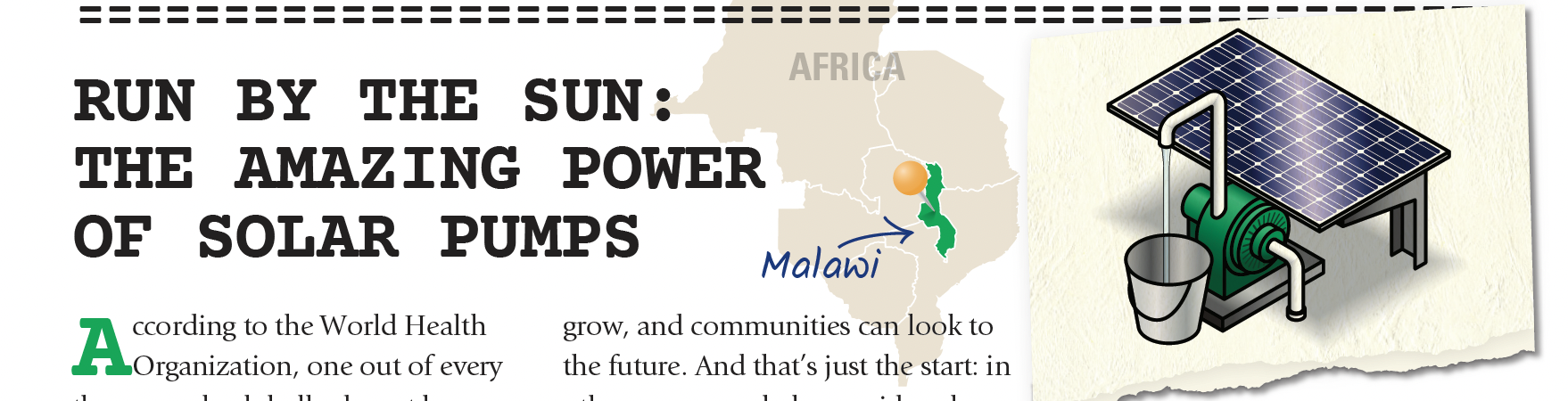
Craft tip: Think small. We’ve featured everything from spotlights on solar water pumps in places where electricity isn’t a given, to therapy puppets that ease the return to
school for kids undergoing cancer treatments. Like this:
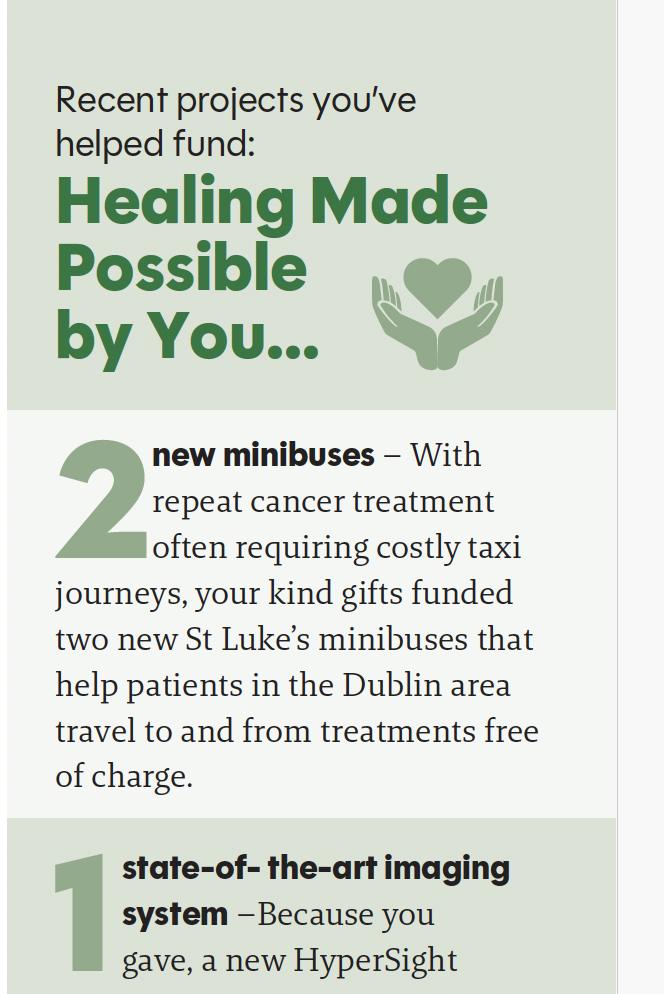
(3.) By the Numbers
What it is: Not a pie chart. Instead, you use infographics to tell – or as part of – a story, and usually that story is “look at
what your generosity made possible” or “the power of your donations to bring about change.”
Why it works: Not every donor connects through narrative. Numbers, when given emotional framing, reassure supporters that your organization is effective, transparent, and accountable... and that’s all part of the loyalty trifecta of trust-commitment-satisfaction.
Craft tip: Remember emotional framing: numbers on their own are sterile,
so don’t just present data. Give readers a sentence or two explaining why the numbers matter, how they helped, or what they mean. And give your By the Numbers piece some gravitas – a lovely headline, a deck, a thank-you footer. Here's one excerpt to help you with framing (and note how the numbers don’t have to be giant):
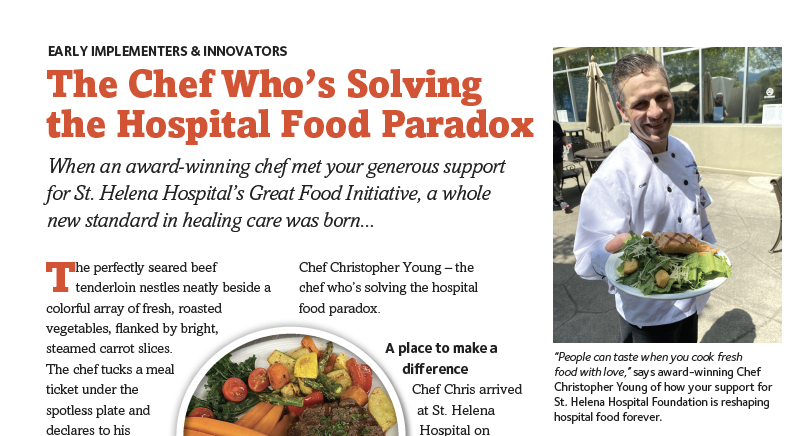
(4.) The Expert Profile
What it is: Spotlight a staff member, researcher, clinician, counselor, or other expert connected to your work. We’ve featured everyone from hospital chefs to head groundskeepers to world-famous cardiac surgeons. Supporters love these, because they put a human face on your work.
Why it works:
Expertise builds trust. It also helps supporters better understand the issues your organization is tackling, and gives them dedicated and caring people behind the scenes they can root for and believe in.
Craft tip: Focus on insights rather than credentials – this isn’t a CV. And include humanizing details where you can. For our groundskeeper, he also does search-and-rescue volunteering in his off hours, and writes updates on the natural life he sees
on this nonprofit’s campus... and the chef featured below says a prayer for patients every time he hears a 'Code Blue' (a life-threatening medical emergency) on the hospital intercom. Feeling personally connected to the faces behind the work is a beautiful thing.
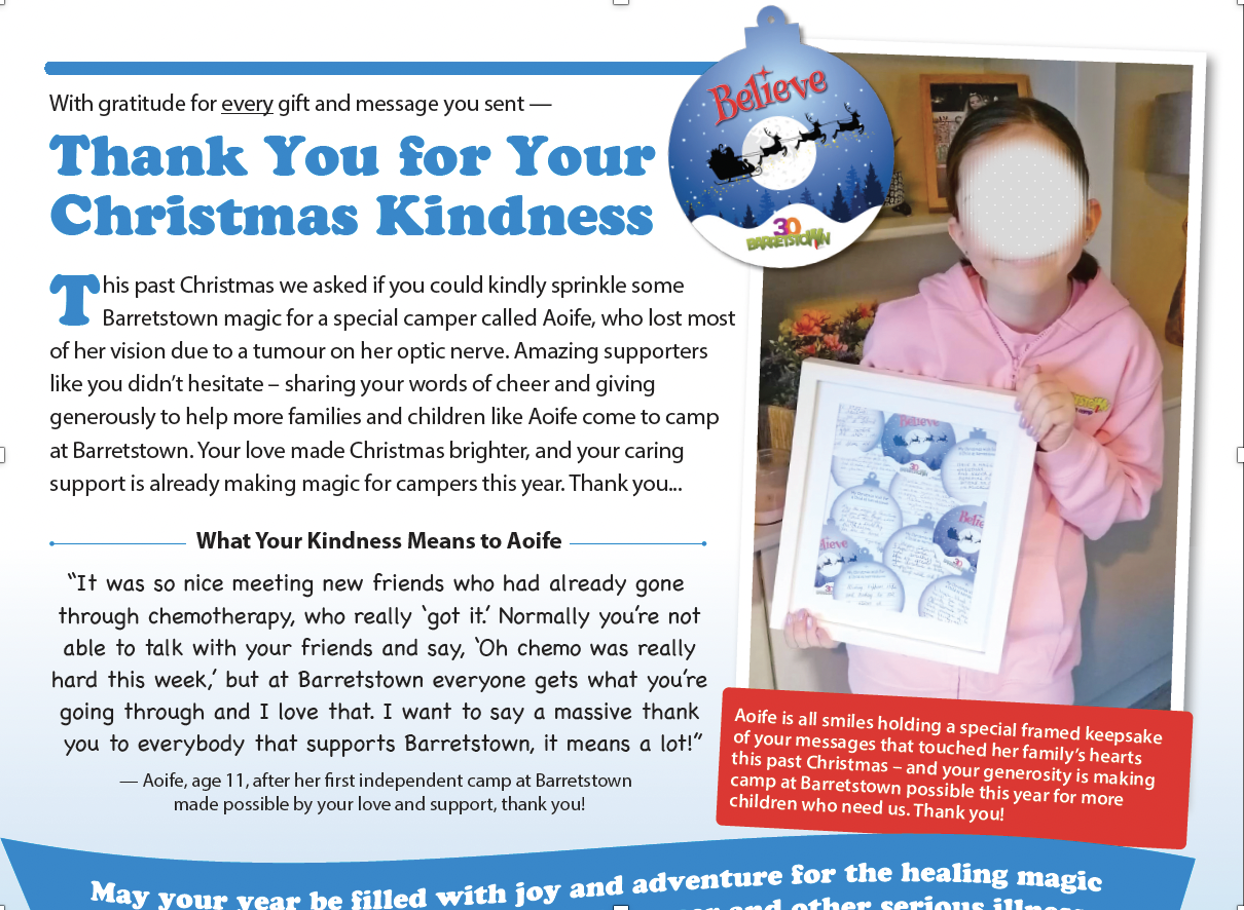
(5.) The Report-Back Story
What it is: Revisit a person, family, community, or project supporters helped fund and share what happened next.
Why it works: Donors rarely hear the rest of the story. Report-backs build trust and satisfaction by showing supporters the difference their gifts made.
Craft tip: Don't wait for a perfect ending. Progress is often more believable and
inspiring than perfection. To be fair, you could say that the vast majority of your newsletter stories will be report-back stories, and you'd be correct: that's what newsletters are about. But not all, and not specifically in this way. Think: Where are they now?... Catching up with [name of past appeal feature]... Your love last spring... etc. Like this:
A wish list here. A thoughtful staff profile there. A grateful report-back. A different way to look at the numbers.
On their own, these stories may not seem like much. But together?
Together they help build that
magical mix of trust, commitment, satisfaction, and ultimately, loyalty that keeps your supporters and members connected and caring for the long haul.
And these are just the start. Next Loyalty Letter, we’ll look at more newsletter features that help your supporters feel seen, appreciated, and part of something bigger than themselves... because that’s exactly what they are.
Thank you for being a subscriber, and thank you for the work you do.